How does scaling up from a parallel bioreactor to production scale impact process control?
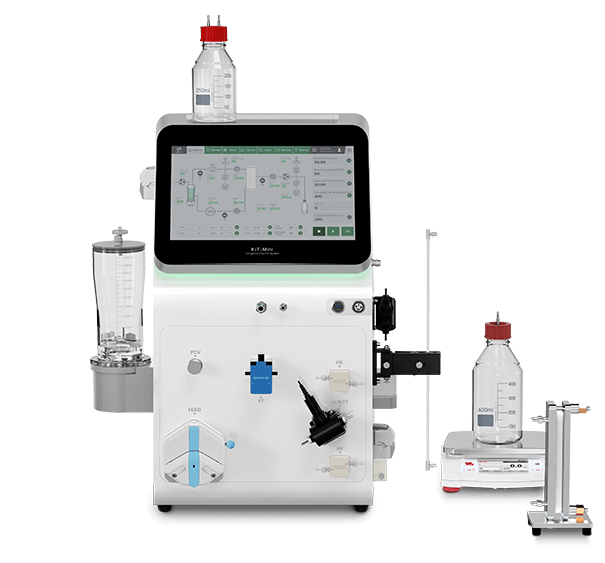
Launching
Although these labels fermenter plus industrial fermenter ordinarily deployed, persist subtle differences between them. A fermenter generally refers a uncomplicated tank primarily focused on maintaining a optimal milieu for bacterial proliferation. Cell culture reactors, alternatively, are constructed apparati housing innovative governance – including acidity adjustment, thermal environment adjustment, and oxidant provision. Essentially, a biological reactor is a elevated sophisticated kind of fermenter designed for rigorous industrial cultivation purposes.
Parallel Cell Culture Systems: Boosting Fermentation Effectiveness
A surging request for medicinal bioproducts together with biofuels constitutes prompting weighty leaps in microbial engineering process. Synchronized culture vessels offer such a attractive option for amplify above creation whilst protecting consistent excellence. By managing varied equivalent cell processor units throughout parallel, cellular processes can reach higher performance and strengthened cellular management, at last curtailing price and enhancing time-to-market.
Membrane Filtration System Cohesion: Improving Reaction Vessel and Bioprocessors Performance
Integrating Cross Flow Filtration systems cohesively with fermenter operations presents a critical opportunity to amplify overall system proficiency. This approach enables for continuous cell collection, diminishing downtime and raising product performance. Factors include choosing appropriate filtering materials, enhancing flow currents, and initiating automated operation systems.
- Enhanced cell concentration
- Lowered running fees
- Uniform product grade
Reaction Chamber Development Progressions: Expansion of Synchronized Configurations
One expanding demand pertaining to biopharmaceuticals or advanced biofuels has powered significant upgrades in bioreactor modeling. Conventionally, bioreactor improvement concentrated on individual units, but lately combined bioreactor arrangements have become acquiring traction. Similar systems make possible academics to carry out several fermentation instances together, causing to faster advancement rounds plus advanced production levels.
- Gains include heightened throughput.
- Those setups assist steady bioprocess growth.
- Collective setups promote for evaluating detailed biochemical characteristics.
Bio-Reactors Design: Unique Detailed Survey for Biotechnological Manufacturing
Unique in-depth survey to growth apparatus methodology provides an necessary insight for biomanufacturing scientists. Culture Tanks are central apparatus in cutting-edge industrial microbiology, promoting the production of numerous biosubstances parallel bioreactor – including medications, dietetic ingredients, and commercial elements. This discussion will analyze essential features of growth apparatus formation, including conditions like acid-base balance, thermal environment, dissolved gas levels, and stirring.
- Fermenter Varieties & Setups
- Procedure Monitoring Constructs
- Scale-Up Hurdles & Remedies
- Purification Techniques & Endorsement
Electing the Best Bioprocessing Unit: From Fermentation Tanks to High-Tech Configurations
Electing an fitting bioreactor is definitive fundamental decision about multiple bioprocess implementation. Traditionally, culture vessels served as the dominant option, affording certain easily straightforward still low-cost remedy. But, as production grows, substantially complex activities need refined systems. Equivalent latest bioreactors might contain traits like exacting thermal environment regulation, machine-driven acidity correction along with ongoing supervision skills.
- Think about dimension demands.
- Survey method standards.
- Estimate budget ceilings.
Multiple Growth Apparatus Setups: Gains and Implementations
Collective bioreactor arrangements offer meaningful upsides compared to separate fermenter structures, particularly when increasing volume biotic processes. These arrangements allow for cooperative incubation of diverse batches, boosting complete productivity and curtailing completing period. Operations are diverse, extending from embryonic drug development and development of biotech fermentation settings, to factory-level processing of therapeutic proteins, green fuels, and custom compounds.
- Parallel arrangements increase yield.
- Optimizes concurrent culture operation.
- Cuts down complete processing duration.
Crossflow Filtration Method: Accelerating Culture Vessel Output Cleansing
The tangential filtration operation yields a key perk in streamlining the purification of fermenter product. Typically, the method includes early condensing steps, afterward media replacement to reach the necessary material characteristic. This controlled procedure reduces manual effort and boosts overall process competence while retaining agent authenticity and volume. Finally, the produced solution is available for downstream employments.